

Losing someone is deeply personal, and every family chooses to remember a loved one differently. Some prefer a traditional funeral, while others want more time to gather relatives, prepare tributes, memorial coffee table books, and reflect. A memorial service offers that flexibility because it is usually held without the body present and may take place days, weeks, or months later.
If you have never attended or planned one, you may wonder what is a memorial service and what actually happens during the gathering. There is no single format, but most include stories, music, photographs, readings, reflection, and time to connect.
This guide by Life Katha by Maneesh Media explains what to expect, how the event is usually structured, and how families can make it personal without making it complicated.
Why Do Families Hold a Memorial Gathering?
The purpose of a memorial service is to honour a person’s life rather than focus only on their death. It creates a shared space where family, friends, colleagues, and community members can remember the individual, support one another, and reflect on the relationships they shared.
The gathering may be religious, spiritual, secular, traditional, or informal, and can take place anywhere meaningful to the family.
The gathering does not need to be sad from beginning to end. Tears, laughter, silence, gratitude, and storytelling can all belong in the same room.
What Usually Happens When Guests Arrive?
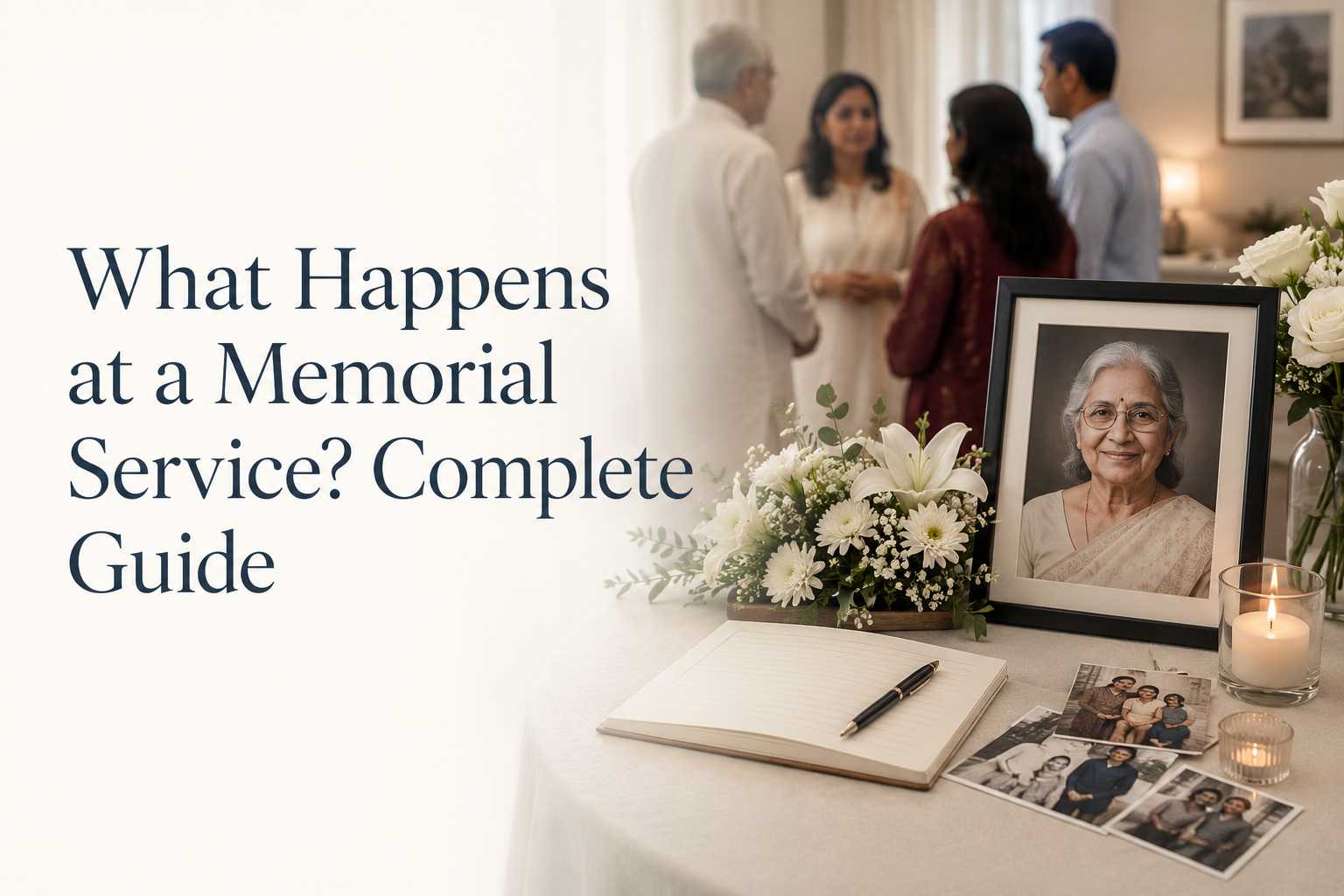
Guests often arrive early, greet the family, sign a remembrance book, and look at photographs or meaningful objects. A portrait, memory table, life story book or soft background music may welcome them.
Once everyone is gathered, a family member, celebrant, friend, or religious leader welcomes the guests. The opening may include a few words about the deceased, a prayer, a favourite quotation, or a piece of music.
A clear memorial service order may include an opening, eulogy, readings, music, personal tributes, silence, and closing words. Structure helps the event flow, but it should still leave room for emotion and spontaneity.
Eulogies and Personal Tributes
A eulogy is often at the heart of a memorial service. Rather than listing every date and achievement, a good eulogy helps people remember the human being behind the facts.
A speaker might talk about the person’s humour, values, relationships, interests, or small unforgettable moments. A few vivid stories can say more than a long biography.
Families may choose one main speaker or invite several relatives and friends to share brief tributes. Different voices can reveal different sides of the same life.
If several people are speaking, it is helpful to agree on approximate speaking times beforehand. This keeps the ceremony balanced while still allowing every tribute to feel sincere.
Readings, Music, and Quiet Reflection
Words and music can express emotions that are difficult to say directly. Families often choose memorial service readings from religious texts, poetry, literature, personal letters, or passages that reflect the person’s beliefs and character.
Music may be live or recorded: a hymn, devotional song, instrumental piece, or simply a song the person loved. It also creates gentle pauses between speeches.
During a memorial service, a short silence can be just as meaningful as a spoken tribute. Some families light candles, place flowers, write messages, or invite guests to pause quietly and remember one moment they shared with the person.
Not every selection needs to focus on grief. Themes of love, friendship, courage, gratitude, or a life well lived can feel more personal.
Photographs, Videos, and Meaningful Objects
Visual memories help people reconnect with different chapters of a life. A memorial service may include a slideshow, video tribute, photo wall, framed portraits, letters, awards, travel keepsakes, artwork, favourite books, or objects connected to hobbies.
These details make the gathering personal. A wedding photograph may revive one memory, while an old work image may prompt a completely different story.
Some families later collect these photographs, stories, letters, and memories into a coffee table book. This can become a lasting family keepsake that preserves more than what could be shared during a single gathering.
Should You Create a Program?
A simple memorial service program can help guests follow the ceremony and may also serve as a keepsake. It can include the person’s name, photograph, birth and death dates, sequence of events, speakers, songs, readings, and a short message from the family.
The design can be simple: a meaningful photograph, clear layout, and a few carefully chosen words are often enough.
For a longer memorial service, a printed or digital program can be especially helpful because guests know what to expect. Families may also include a favourite quotation, a short biography, donation information, or an invitation to share written memories.
Inviting Guests to Share Memories
One of the warmest memorial service ideas is to give guests an opportunity to share short memories. This can happen through an open microphone, written memory cards, a guest book, or informal conversation after the ceremony.
Spontaneous stories often reveal things close relatives never knew. A colleague may remember an act of kindness, a childhood friend may recall a funny incident, and a neighbour may remember a small daily gesture.
At a smaller memorial service, these conversations may happen naturally over refreshments rather than through formal speeches.
Nobody should feel pressured to speak. Listening can be just as meaningful as sharing.
Religious and Cultural Traditions
Families often shape the event around their faith, culture, and regional traditions. Depending on the family, there may be prayers, chanting, scripture, hymns, blessings, incense, floral offerings, or other rituals.
A memorial service can also include guests from many different backgrounds. In that situation, a brief explanation of unfamiliar customs can help everyone participate respectfully.
Families do not need to follow customs that feel inauthentic. Cultural traditions can sit naturally beside favourite music, photographs, and personal stories.
Celebration of Life or a Memorial Gathering
The phrase celebration of life vs memorial service often comes up when families are deciding what kind of gathering they want. The terms overlap, but a celebration of life usually suggests a more informal, uplifting atmosphere focused on stories, personality, and shared experiences.
A memorial service may be more structured and can include formal readings, prayers, or a eulogy, although it can still be warm and uplifting.
There are no strict rules. Families can choose the description that feels right and combine reflection with joyful memories.
What Should You Wear?
Dress expectations depend on the family, venue, religion, and culture. Dark or neutral clothing is still common, especially in formal or faith-based settings, but black is not always required.
If the memorial service is held at home, outdoors, or in an informal venue, the dress code may be more relaxed. Some families ask guests to wear a favourite colour.
When no guidance is provided, choose clothing that is respectful, neat, and understated.
How Long Does the Gathering Last?
There is no fixed length, but the formal ceremony often lasts between 30 and 90 minutes. The timing depends on the number of speakers, songs, readings, prayers, and other elements.
A memorial service may be followed by refreshments, a meal, or an informal reception, giving guests more time to talk and share stories.
Families do not need to fill every minute. A shorter, heartfelt gathering can be far more moving than a long event with repeated speeches.
How to Make It Feel Truly Personal
The best way to personalise a memorial service is to think about what made the person recognisably themselves. What did they love? What values guided them? Which stories does the family repeat? What music, places, photographs, or objects immediately bring them to mind?
For a traveller, photographs from different places may shape the event. For a teacher, former students may share lasting lessons. For a music lover, selected songs may become the emotional thread of the day.
Small, authentic details are often more powerful than expensive decorations.
There is no perfect formula for saying goodbye. The real purpose of a memorial service is to create space for remembrance, support, gratitude, and connection.
Families can choose formality or simplicity, faith-based traditions or a secular setting. What matters is that the gathering reflects the person being remembered. When thoughtfully planned, the day can do more than mark a loss. It can preserve stories, reconnect people, and give family members memories they will carry for years.
FAQs
1. Can it be held weeks or months after someone dies?
Yes. Because the body is usually not present, families have flexibility with timing and can arrange the gathering after burial or cremation.
2. Who should speak during the ceremony?
A family member, friend, religious leader, celebrant, colleague, or several people may speak. Families can choose formal eulogies, short memories, or both.
3. Is food required afterward?
No. Food is optional, some families serve tea, coffee, snacks, or a meal so guests can stay and connect, but refreshments are not required.


